
Sing Out Loud! by Esplanade – Theatres on the Bay
'Sing Out Loud!', a small-scale programme, demonstrates the applicability of the Impact Measurement Framework at different tiers.
Last updated 29 December 2025
About the Sing Out Loud! programme
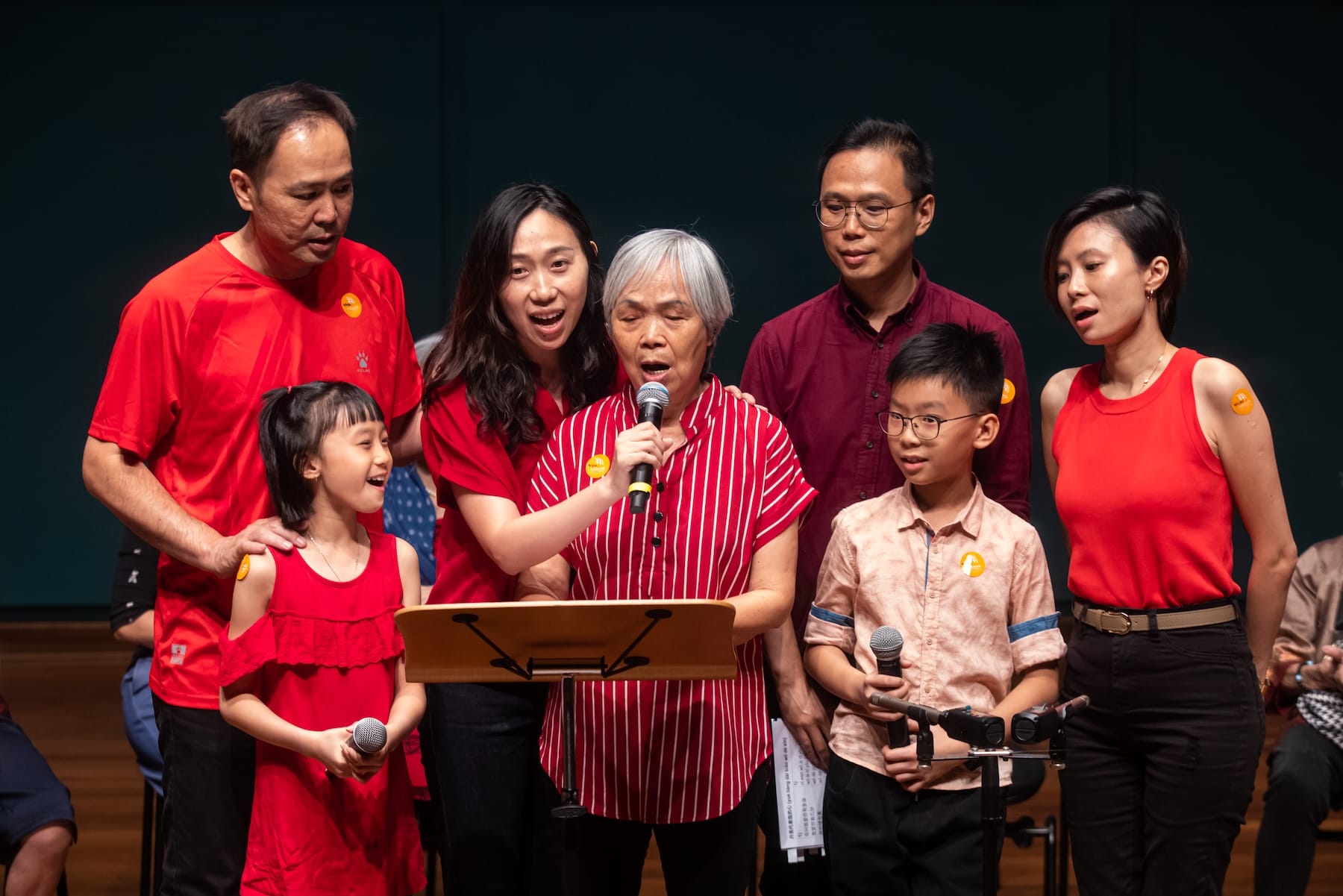
Research underscores the powerful impact of music as a stimulus for people living with dementia, evoking memories and emotions while fostering communication, social interaction and positive shared experiences. Esplanade’s community engagement programme Sing Out Loud! was developed in partnership with Dementia Singapore, a social service agency focused on dementia care and advocacy. Over the course of three editions, the programme sought to enrich the lives of persons living with dementia through singing, while also providing an avenue of support and respite for caregivers.
Programme edition 2023
Key partners: Esplanade, Dementia Singapore
Programme participants: Persons with dementia and their caregivers
Funding: $13,043
Number of participants: 20 (11 persons with dementia and 9 caregivers)
Theory of change illustrating the desired impact and outcomes of Tote Board's support for Esplanade's community engagement programmes in general
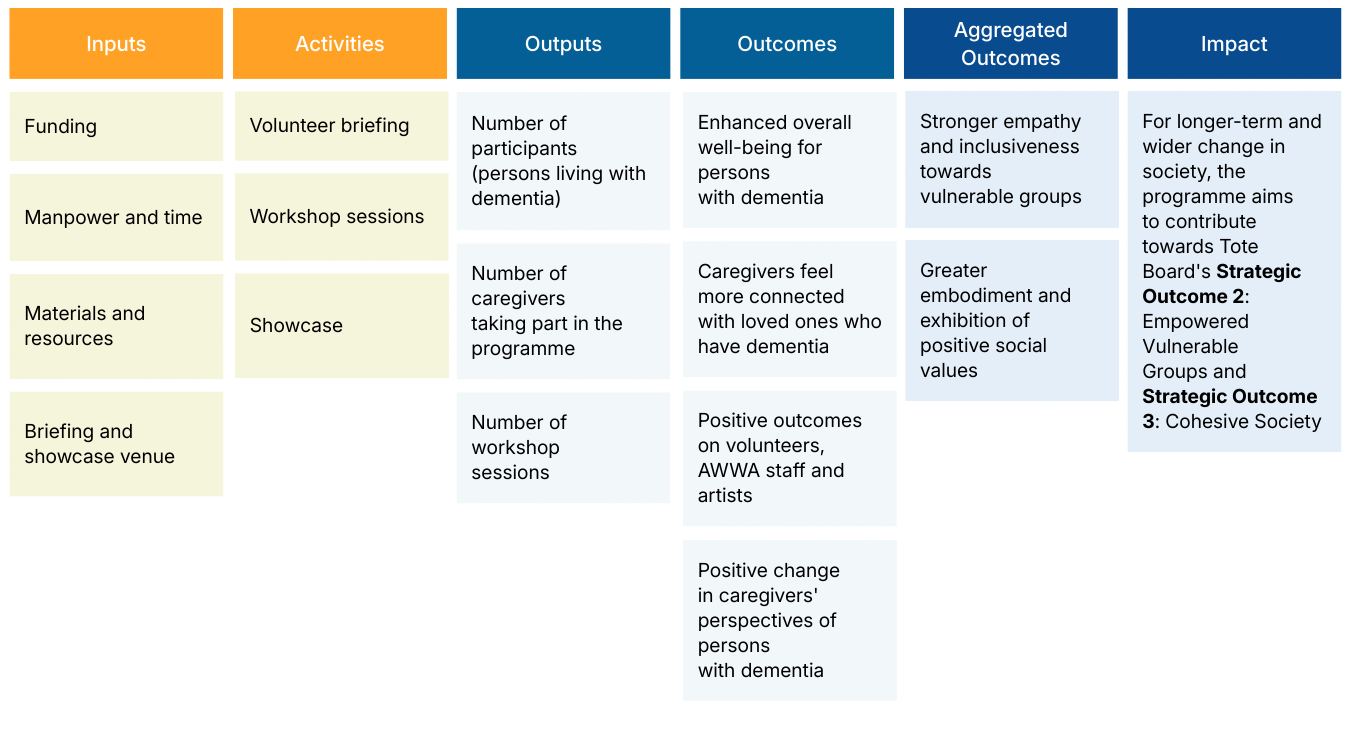
Download a high-res version of the infographic here [PDF,41 KB].
Implementation
Sing Out Loud! 2023 consisted of eight one-hour workshop sessions that took place at AWWA Dementia Day Care Centre (Yishun) twice weekly, where an arts facilitator conducted hands-on music activities with participants.
The programme culminated in a showcase at the Esplanade Recital Studio involving caregivers, invited care staff and senior management from Esplanade and AWWA.
Sing Out Loud! 2023 saw the strongest caregiver involvement compared to its previous runs, with nine out of 11 participants having caregivers in attendance.
Impact and outcomes
Post-programme, 90% of caregivers perceived their relationships with their loved ones with dementia to have either remained stable or improved.
Qualitative data from caregivers showed that their loved ones who have dementia positively benefitted from the eight-week programme. Ten statements relating to their physical, social and emotional well-being, level of arts engagement, sense of self, memory recall, and the propensity to learn new skills were rated by caregivers on a five-point Likert scale. Overall, there was a 7% increase in positive sentiments to these statements. Those specifically relating to physical, social and emotional well-being saw an 8.3% improvement.
Qualitative programme impact
Caregivers
Positive change in how caregivers viewed their loved ones with dementia
A few caregivers shared that their loved ones appeared happier, more confident and less temperamental
Persons with Dementia
Seven out of 11 participants showed higher engagement scores in Sing Out Loud! sessions, compared to pre- and post- scores in non-structured music programmes such as karaoke and music movement activities
Engagement scores were higher in the presence of a caregiver, particularly when a familiar and close caregiver was involved
Volunteers
Seven out of nine volunteers agreed with the statement: “This experience allows me to gain a new perspective on things”
Six out of nine volunteers agreed with the statements: “I am genuinely concerned about the beneficiary group” and “This experience can give me a chance to learn new skills”