
Feature Articles
Communities of Care: Small Acts, Stronger Support for Singapore's Seniors
3 July 2026
Through small acts of care and community partnerships, Sunlove Active Ageing Centre helps elderly couple Uncle Tan and Aunty Hui Ru age with dignity and confidence under Singapore's Communities of Care model.
There is a moment Aunty Hui Ru still talks about.
She had just been discharged from hospital after a fractured hip. Weeks of pain, uncertainty, and the slow, humbling work of learning to move again. When she finally came home, she was not alone. The staff from Sunlove Active Ageing Centre were there, carrying her heavier belongings up the stairs for her. It was a small thing, really. A few bags, a few flights of steps.
For Aunty Hui Ru, it meant everything.
When you are 81 and have spent weeks in hospital, the simple act of someone showing up to carry your bags home is not a small thing at all.
For Uncle Tan and Aunty Hui Ru, ageing has not arrived all at once. It has come gradually, in the letters that grow harder to read, the errands that grow harder to run, and the days that grow quieter and longer. The married couple, who once spent much of their time travelling, now live together in a community apartment at Depot Road, leaning on each other and increasingly vulnerable to the isolation that so often accompanies old age.
That began to change when they found Sunlove Active Ageing Centre, and through it, a wider network of support under the Communities of Care (CoC) model, led by the Agency for Integrated Care (AIC). The model brings together community organisations, healthcare providers, and social services under one framework, creating a more holistic and accessible approach to senior care. In this case, the centre serves as a touchpoint where seniors can receive practical day-to-day assistance conveniently within their own neighbourhood.
A key part of the couple's support system has been the close relationship built with Sunlove staff, particularly Tong Joo — affectionately known as TJ — an Assistant Manager at Sunlove Active Ageing Centre. While he mainly oversees daily operations and the planning of programmes and activities, TJ has also developed a close relationship with Uncle Tan and Aunty Hui Ru by looking out for them.
"Building trust takes time," he shared. "You need to engage with them, listen to them, and show concern and care. After a while, they'll trust you more."
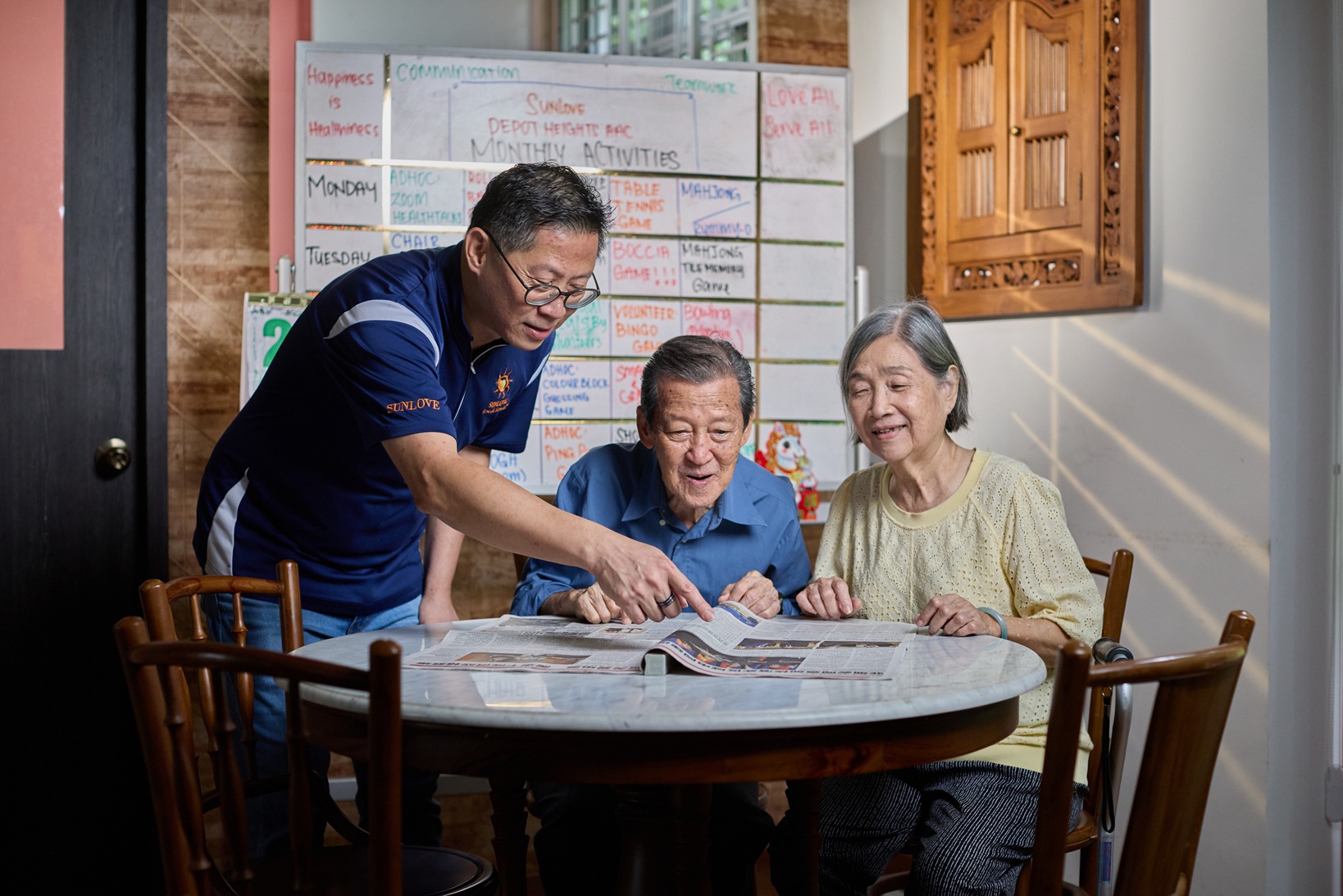
Tong Joo with Uncle Tan and Aunty Hui Ru, a relationship built on trust, one small act at a time.
That trust was especially important during Aunty Hui Ru's hospitalisation. Back at home, Uncle Tan became withdrawn, spending long periods alone and struggling to maintain his usual routine. It was the staff at Sunlove who gently encouraged him to keep coming to the centre, not for any formal programme, but simply to be around people who noticed whether he had eaten, and who asked how he was doing. This kind of quiet, consistent check-in is often the first thing to fall away when seniors are socially isolated, and the hardest to replace.
When Aunty Hui Ru finally came home, it was not just her health that recovered. It was the rhythm of their life together. And it was that same quiet act of the staff showing up, carrying her belongings upstairs, that she still speaks about today as one of the most meaningful expressions of care she has received.
Sunlove staff aim to play a more meaningful role in the lives of the seniors under their charge. As Uncle Tan and Aunty Hui Ru are not well-versed in English and have limited digital literacy, staff members regularly assist them with reading letters, booking transport, and ordering meals online. On one occasion, the couple mistakenly booked a cruise package online with incorrect pick-up and drop-off points. With help from the staff, they were eventually able to cancel the booking and secure a refund.
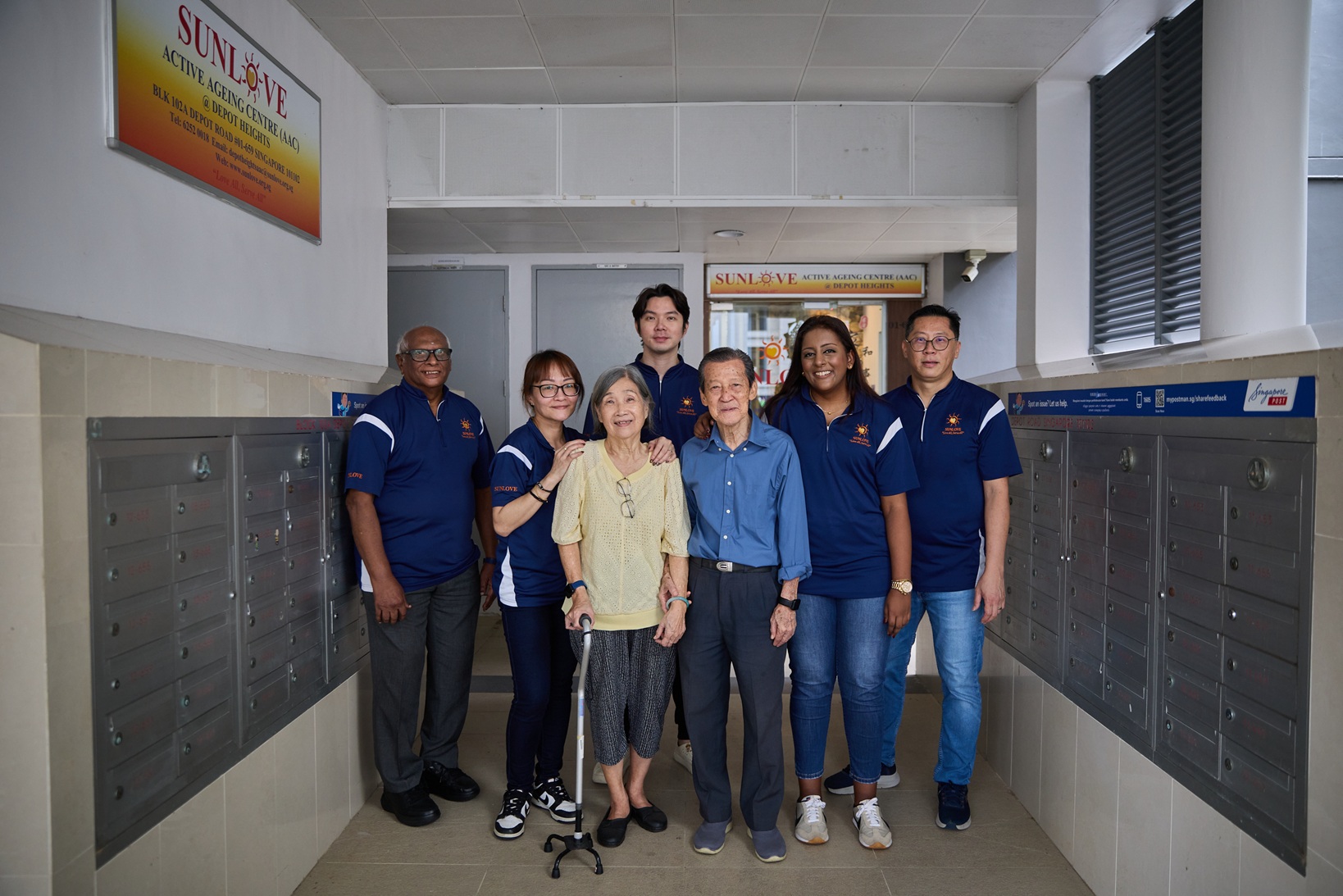
The Sunlove team has become a trusted source of help for everyday challenges big and small.
Over the years, the couple have actively participated in a wide variety of programmes at Sunlove, including karaoke, drone flying, archery, pickleball, health talks, and outings to Expo, Singapore Zoo, Botanic Gardens, and hawker centres. For seniors with limited mobility and fewer opportunities to go out, these activities are meaningful ways to stay physically active, mentally engaged, and socially connected.
Tong Joo shared that Sunlove intentionally curates programmes that keep active ageing enjoyable and engaging. For instance, the centre once organised a coconut-themed workshop at Sentosa. Seniors spent the afternoon making crafts with coconut husks and enjoying a coconut shake afterwards. Outings are also organised complete with meals after the activities, giving seniors more opportunities to bond outside the centre.
Care that comes to you
What makes the CoC model particularly effective is that it does not stop at social support. Sunlove works closely with healthcare services such as SingHealth's Community Health Post (CHP), with nurses stationed at the centre to provide regular guidance on medication, health concerns, and follow-up care. Whether it is arranging nail-cutting services for a senior with a fall risk or conducting dementia assessments for those showing early signs, these partnerships bring care closer to where seniors already are, reducing the need to travel frequently to polyclinics or hospitals.
When the right partners are in the same room, seniors no longer have to navigate the system alone. For Tong Joo, this is ultimately about building confidence and reassurance. By regularly inviting healthcare and community partners to conduct talks at the centre, Sunlove helps seniors become more open to receiving help.
"When multiple partners come together, seniors know who they can turn to," he shared. "They feel more assured because the services are familiar to them and something they can trust."
From one couple to a community
For Uncle Tan and Aunty Hui Ru, that support network has made a meaningful difference in their daily lives. Despite being in their eighties, they remain happy, cheerful, and adventurous, often smiling and engaging with activities around them. With people to turn to for help, they feel more confident navigating daily challenges. Over time, Tong Joo has also become someone they can comfortably rely on. "If there are any problems, I can just come downstairs and ask them for help," Uncle Tan shared.
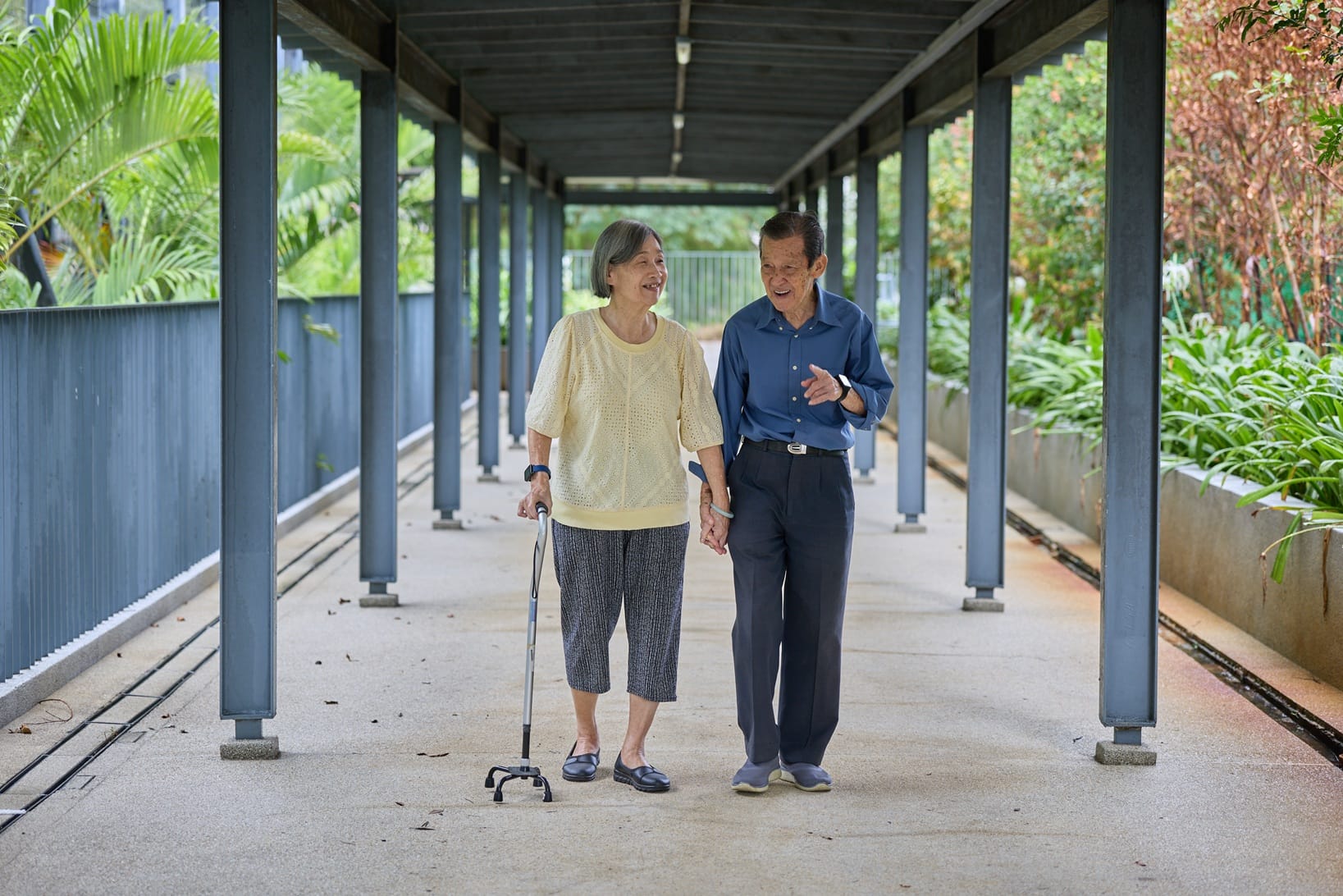
Uncle Tan and Aunty Hui Ru make the short walk to Sunlove, a daily routine that has become an anchor in their lives.
The couple now enjoy a more fulfilling routine, often visiting the centre every weekday for social gatherings, games, and exercise sessions. They interact with fellow seniors and staff, simply enjoying the sense of community around them and sometimes sharing a meal together.
Their story is not unique. Across the Communities of Care network, seniors like them have similarly gained easier access to healthcare support, social activities, and community services. Their experiences are a reminder of what becomes possible when care is designed around people, not processes.
Building a Better Everyday
As the largest grantmaker in Singapore, Tote Board believes that lasting change happens when communities are equipped to care for one another. Through the Tote Board Better Health Fund, a fund supporting social service agencies and non-profit organisations to pilot innovative programmes in the community care sector, Tote Board supports the CoC initiative as part of wider efforts to strengthen integrated community care for seniors. The goal is straightforward: seniors are better supported when care comes not from one organisation alone, but from the wider community working together.
“Through working with community partners like Sunlove, we help elders like Uncle Tan and Aunty Hui Ru age with dignity and confidence. Building a caring community that addresses both healthcare and social needs of the people of Singapore, Toteboard hopes to make everyday a better day,” shared Amy Lim, Director (Programmes), Grants, Tote Board.
The funding has made these programmes accessible at no cost to seniors aged 60 and above with limited support networks. It also supports outreach efforts such as educational roadshows to raise awareness about available services, and enables centres to establish and sustain the partnerships that make integrated care possible.
"Funding support by Tote Board has been instrumental," says Tong Joo. "It opened doors to more partnerships and collaboration, enabling community and healthcare partners to meet their seniors' diverse needs more effectively."
In a society where the population is ageing and the demands on community care are only growing, the question is not whether we can afford to invest in this kind of support. It is whether we can afford not to. Every relationship built, every barrier removed, and every senior who feels less alone is a step towards a Singapore where no one grows old without a community around them.
For Uncle Tan, the answer is simple. "Got people help us," he said. "We very happy."