Impact measurement
More than a game
5 October 2026
Content
Stories
Supported by Tote Board's Greater Impact Forward Together (GIFT) Programme, non-profit organisations like Netball Singapore are building the capabilities to measure what matters, enabling them to strengthen programmes and deepen their impact over time.
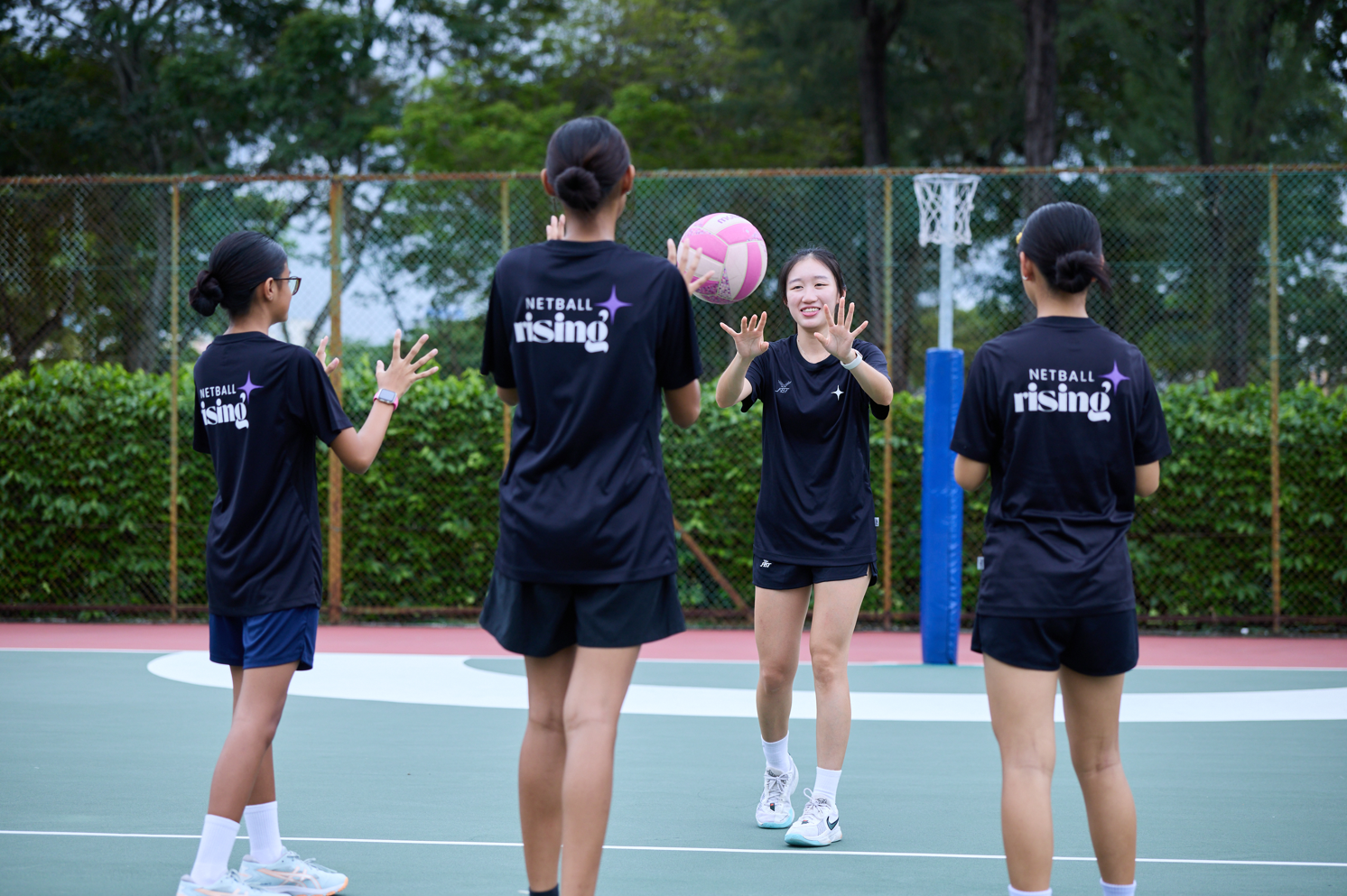
Claudia Yap, Head Coach of Netball Rising, guides players during a practice session. Through GIFT, Netball Singapore gains a clearer picture of the programme’s impact and where it can be strengthened.
Before Claudia Yap could figure out how to explain a drill to her student, another teammate stepped in. She broke it down in her own words, relating it to a dance move, and suddenly, Claudia understood what coaching was really about.
“It reminded me that coaching isn’t just about teaching skills,” says Claudia, 26, Head Coach of Netball Rising. “It’s about creating an environment where teammates support and uplift each other.”
That moment on the court captured something essential about Netball Rising, a programme by Netball Singapore that brings together girls aged 14 to 16 from vulnerable backgrounds, for 10 months of structured coaching, life skills workshops and competitive exposure. More than a sports programme, it is a safe space where young people can belong.
Netball Singapore’s Programme Manager, Chew Hui built the programme around three pillars: character, confidence and competency. Weekly Friday trainings are paired with monthly learning sessions on topics like nutrition, financial literacy and stress management. The goal is to develop participants holistically, both on and off the court.
Knowing whether Netball Rising is achieving its goals, however, requires more than instinct. That is where Tote Board’s Greater Impact Forward Together (GIFT) Programme comes in. Through training, consultation and mentorship, GIFT helps non-profit organisations (NPOs) embed impact measurement into their work, so they can better understand what works and strengthen their programmes.
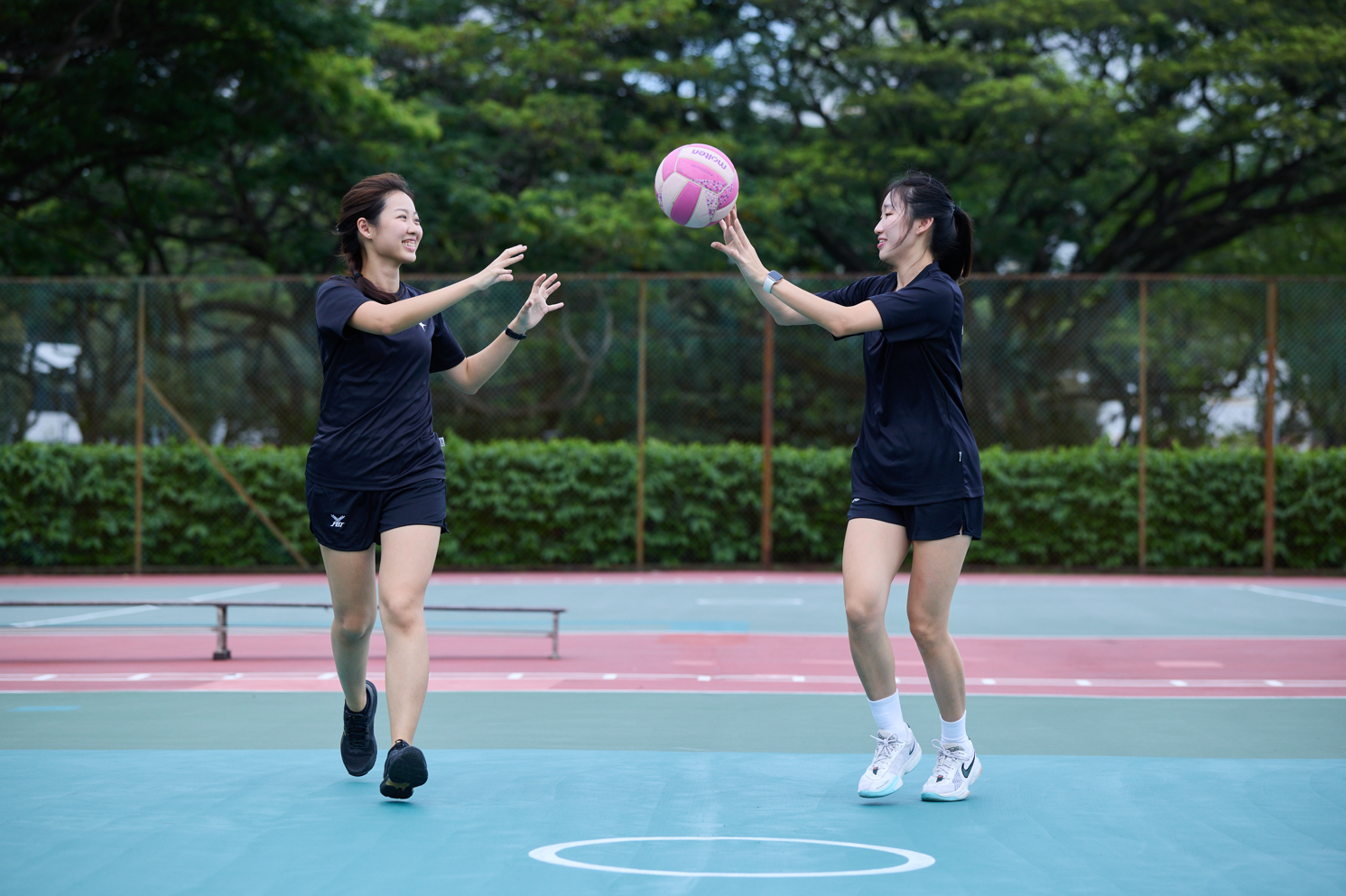
Netball Singapore’s Programme Manager Chew Hui (left) and Head Coach Claudia Yap demonstrate a passing drill. Netball Rising is a pilot programme by Netball Singapore that provides girls from vulnerable backgrounds with structured coaching, developmental support and opportunities to grow through sport.
GIFT is part of Tote Board’s wider effort to strengthen impact measurement capabilities in the non-profit sector, following gaps identified through a 2024 dipstick survey.
With the implementation of GIFT, an impact measurement guide, workshops and clinics for the non-profit sector, a 2025 study showed that impact measurement ability rose from 76% to 85% and access to external resources from 48% to 56%. Among the NPOs, 72% have applied some form of impact measurement.
For Netball Singapore, that journey is taking shape through a structured framework to track outcomes such as participants’ confidence, motivation, growth and sense of belonging. Supported by GIFT’s Innovation Fund, the organisation is testing and refining how it measures these outcomes, so that future cohorts can benefit from programmes designed with greater intention and informed by evidence.
In partnership with the Singapore Management University (SMU)’s Lien Centre for Social Innovation, GIFT has onboarded 12 NPOs in its first cycle. Participants receive training and one-on-one consultation to develop impact measurement approaches tailored to their organisations.
The goal, in line with Tote Board’s broader impact measurement approach, is not simply to count outputs, but to understand whether meaningful change is taking place — and to use those insights to improve programmes over time.
With insights from GIFT and its emerging impact framework, Chew Hui is already considering how Netball Rising will evolve. Future cohorts will have more clearly defined outcomes from the outset, with programme activities designed more intentionally to achieve them — so that each girl’s growth, confidence and sense of belonging can be better understood and built upon over time.
It is still early days, but visible shifts are taking place. Attendance has become more consistent. Friendships have blossomed despite the girls coming from different schools. In the past, some girls simply skipped training, leaving coaches unsure of what had happened. Today, they are more likely to show up and be upfront about having a difficult day.
For Chew Hui, these are signs of growing trust and self-awareness. “At least now we know the headspace they’re coming into training with and can support them accordingly.”
What makes GIFT distinctive is the one-on-one support NPOs receive. Across the first cohort, NPOs have received approximately 48.5 hours of sessions. In its first cycle, some 40 staff from 12 organisations have been trained.
What does long-term success look like? For Claudia, it is about nurturing empathy. “I hope they will feel more empathetic towards each other and carry that into society,” she says.
Read more in our Annual Report (opens in new tab).