
Cohesive society
The beat that belongs to everyone
5 October 2026
Content
Stories
For 20 years, Muhammad Riduan has grown alongside Chingay— from performer to composer to leading a 40-member multicultural drumming ensemble at Chingay Parade 2026. His journey shows how Chingay, supported by Tote Board, brings people of different cultures together, and strengthens connections across communities.
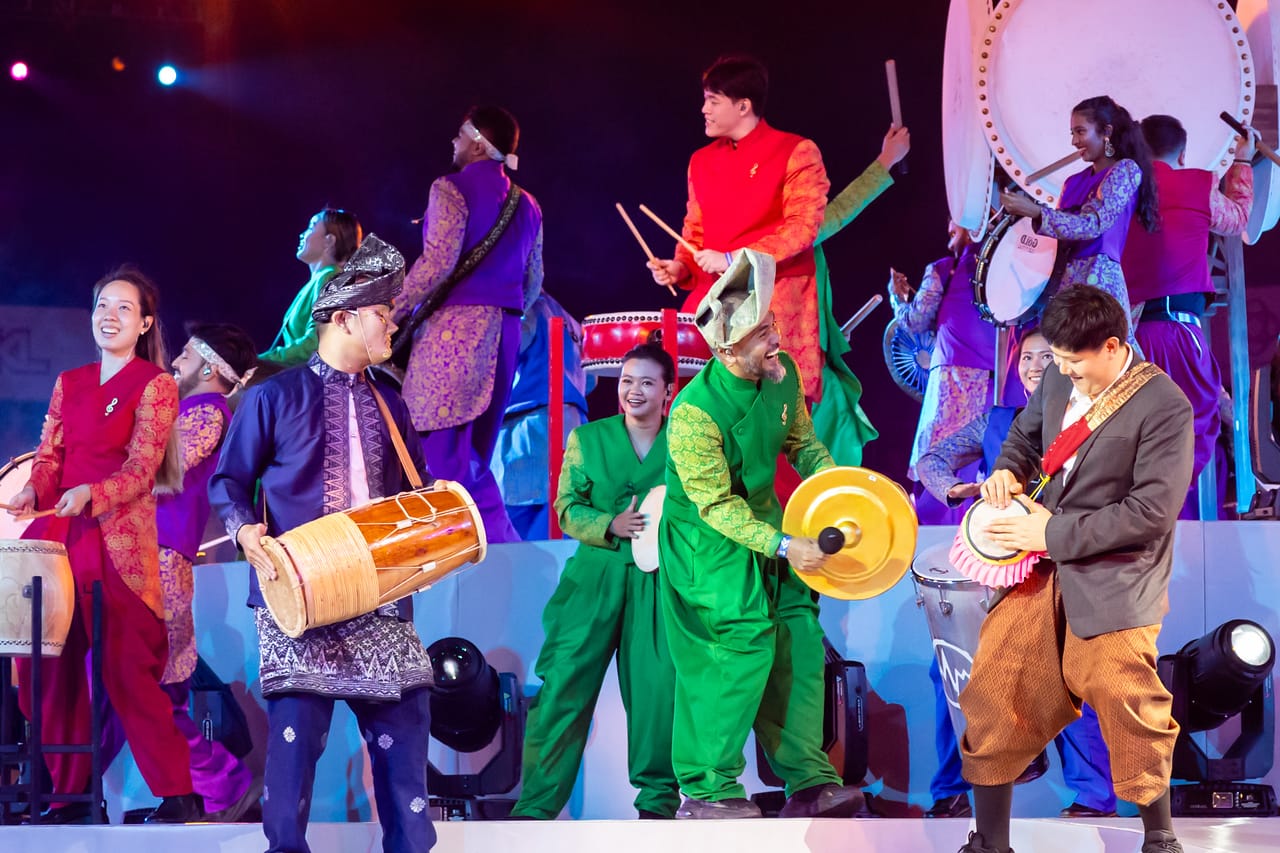
Muhammad Riduan Bin Zalani (centre) performed at Chingay Parade 2026 as part of a 40-member multicultural drumming ensemble. Led by Riduan, the performance celebrated Singapore’s multiculturalism by showcasing the distinct traditions of Malay, Chinese, Indian and Western percussion before bringing them together in a unified finale.
Growing up, Muhammad Riduan Bin Zalani learned to play the rebana[1] the way many things are learned in a close-knit community — by watching, listening and quietly absorbing what the people around him did.
His natural aptitude quickly became apparent. Before long, what began as keen observation had become a passion for the craft.
The lessons he absorbed as a child eventually became something he could pass on. Along the way, Riduan became a Chingay Parade performer, a composer of fanfares for guests of honour, and the founder of Nadi Singapura, a dynamic ensemble that reimagines traditional Malay percussion for the modern era.
Today, Riduan is also known as “Abang” (big brother) to the younger drummers around him. At Chingay Parade 2026, he led and performed with a 40-member multicultural drumming ensemble that brought together four local drumming groups — Nadi Singapura, Drum Feng[2], Damaru[3] and Sambiesta[4] — alongside performers from four ASEAN countries. It was his most ambitious Chingay production yet, after two decades with the parade. Yet, what he remembers most is a quick glance.
[1] The rebana is a traditional Malay percussion instrument in the form of a frame drum. It is widely played across Southeast Asia to accompany performing arts, religious activities and community events.
[2] Drum Feng is a Singapore-based percussion ensemble group that specialises in both traditional Chinese percussion music pieces and cross-genre work.
[3] Damaru is a school of traditional Indian drumming, focusing on the folk, street and classical drumming traditions from various states in India, presenting them in a contemporary style that is unique to Singapore.
[4] Sambiesta is a Singapore-based percussion band specialising in fusing Afro-Brazilian percussion with modern funk, drum and bass.
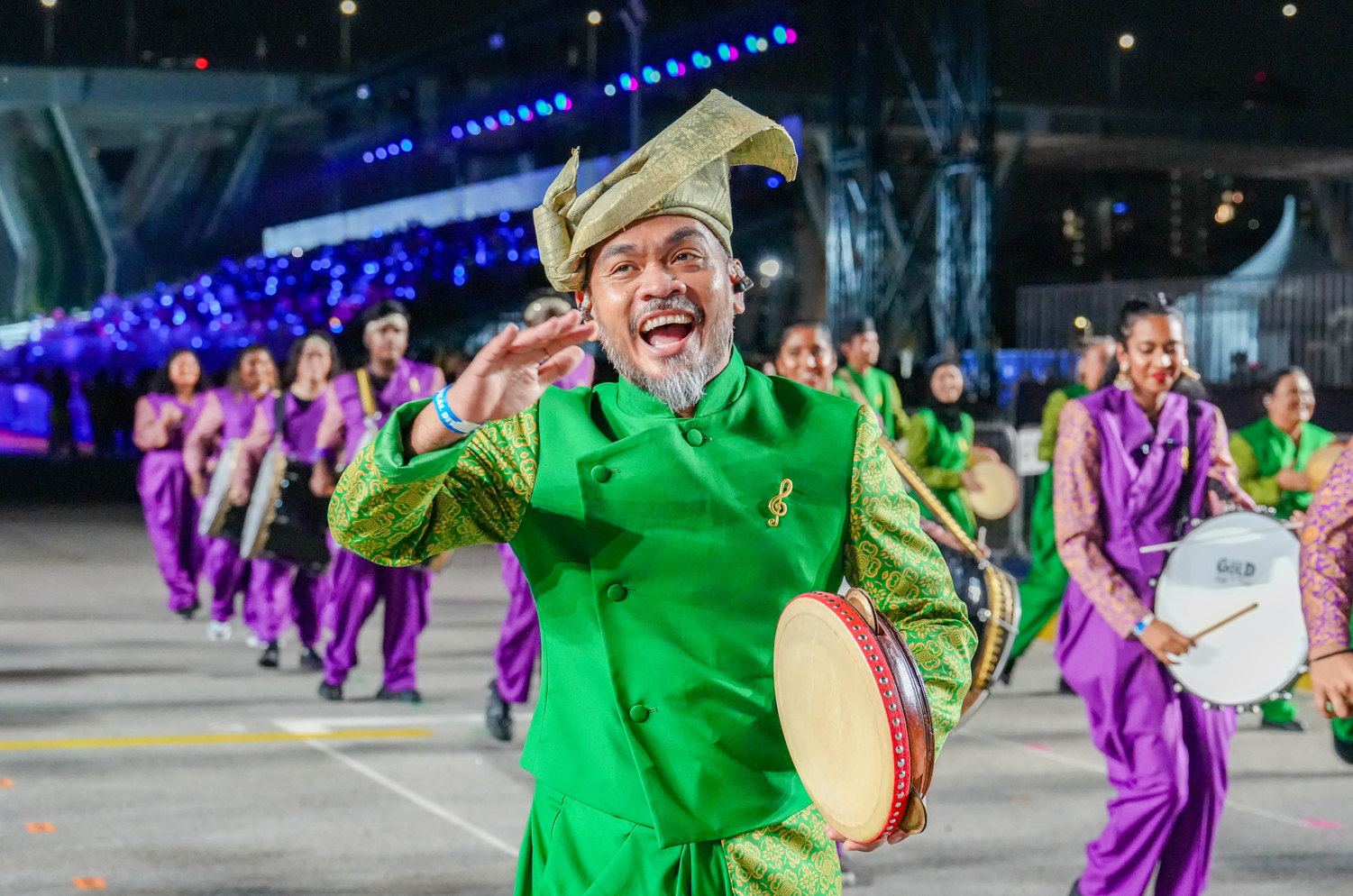
Once a young percussionist in the People’s Association’s Orkestra Melayu Singapura, Riduan has grown with Chingay over the years—from performer to contingent director and is now one of the creative forces behind the parade’s signature performances.
“I looked back at my ensemble — everyone holding their own drum, proud to be there,” he says.
“The people you shared the stage with may not be there next year. These are things we have to cherish.”
The piece Riduan composed gave each ensemble eight bars of unscripted expression, their own voice intact, before the music came together as one. “Our multiculturalism, our harmony — that is very precious,” he says. Each ensemble’s distinct sound was honoured before the music converged into something shared — a deliberate choice that mirrors how Singapore’s communities work best: not by homogenising all cultures, but by letting those voices speak before finding the common rhythm that binds us all.
Supported by Tote Board since 2008, Chingay has grown into one of Singapore’s most expansive celebrations of community and culture. Every year, people from all walks of life come together as onsite audiences, performers and volunteers at the parade as well as related outreach programmes such as community float-making and heartland celebrations. Beyond celebrating culture, Chingay creates opportunities for different communities to connect, deepening understanding between those who might otherwise never share a stage, a float, or a drum.
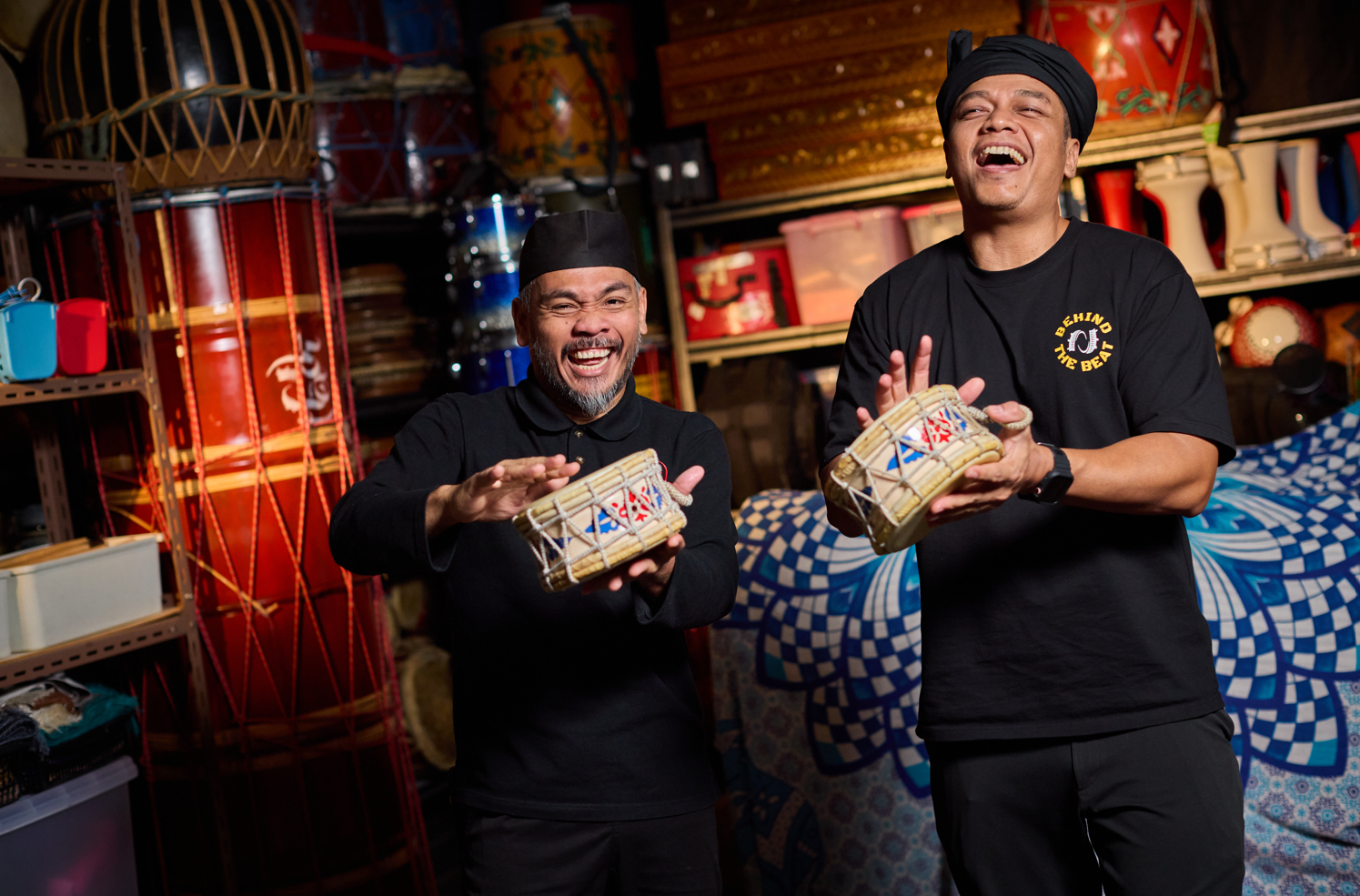
Riduan rehearses with a member of Nadi Singapura. What began as a percussion ensemble has grown into a community of musicians who have stayed together across two generations, united by a shared commitment to the craft and to one another.
“We are friends before we are musicians,” Riduan says.
And when friends perform together, each voice distinct, each rhythm honoured – that is what a community sounds like when it plays as one.
Read more in our Annual Report (opens in new tab).