
Empowered vulnerable groups
The Boy at the hockey pitch
5 October 2026
Content
Stories
When social worker Muhammad Faiz asked Sarimuddeen about his strengths, it marked the beginning of a different future. Through The Scaffold Programme, supported by the Tote Board Social Service Fund, youths are empowered to recognise their strengths, build resilience and realise their potential.
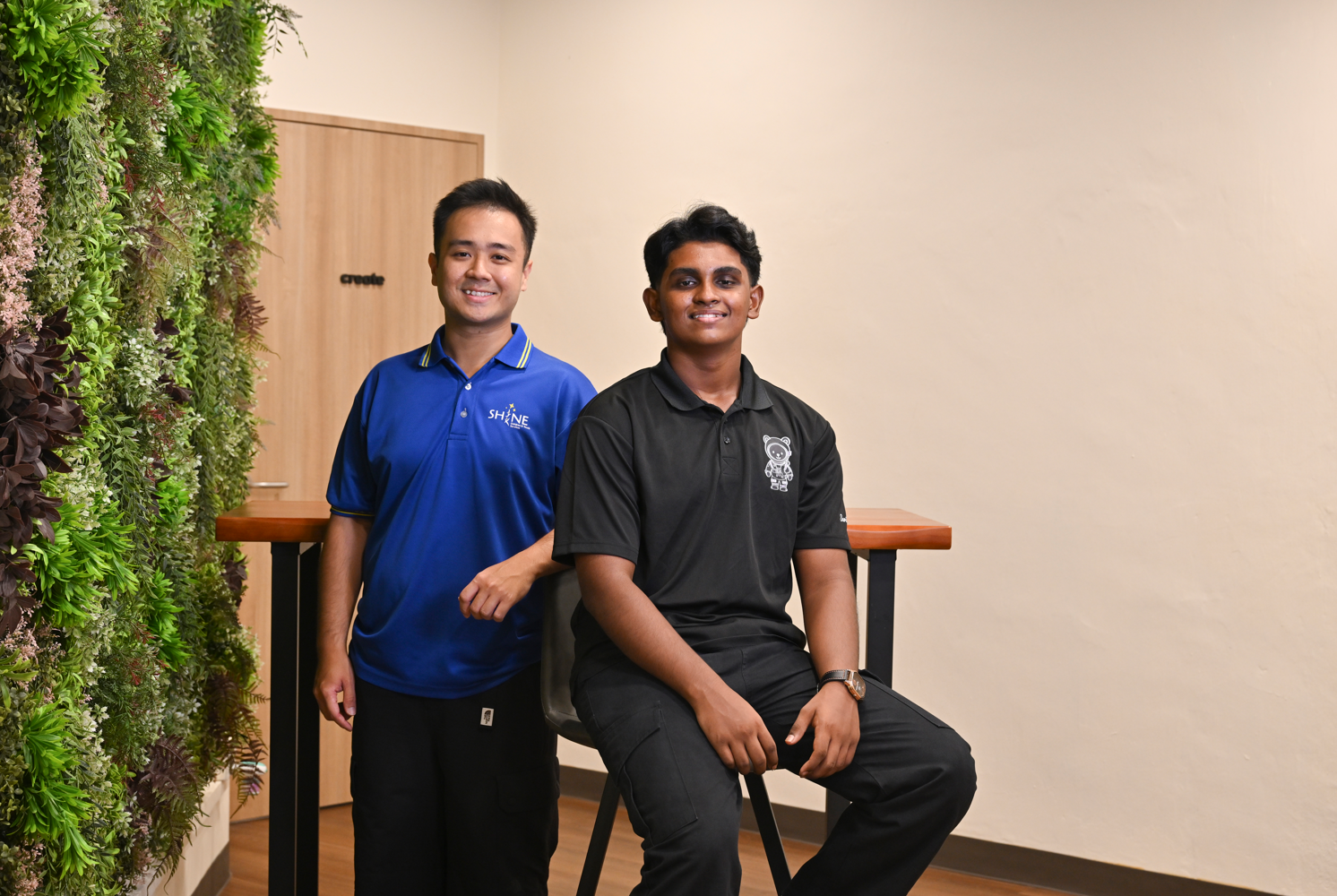
Sarimuddeen (right) fell into bad company in secondary 1 and 2 and described himself as a “problem child” back then. The turning point came when social worker Muhammad Faiz saw his strengths, had a heart-to-heart talk with him and followed through to support him in his growth.
“I told him his conduct grade wasn’t looking good, but I also asked him if he knew what his strengths were.”
Social worker Muhammad Faiz still remembers the afternoon he brought Muhammad Sarimuddeen down to the hockey pitch. Sarimuddeen was in Secondary 2, with a string of discipline cases behind him. Yet, one of his teachers saw in him the potential to lead, while recognising that he still had room to grow. What happened in that conversation would change the trajectory of his secondary school years.
Prior to joining The Scaffold Programme, Sarimuddeen was navigating a difficult period in school. He often found himself disengaged in class, struggling academically, and getting into conflicts with peers. When his form teacher first referred him to the programme, he did not know what to expect but showed up. He stayed because he enjoyed the games, and time with his peers, teachers and a social worker who believed in his potential.
Supported by the Tote Board Social Service Fund (TBSSF), Scaffold is an early intervention programme run by SHINE Children and Youth Services, to support secondary school students facing challenges with school, relationships or self-confidence, by strengthening their social-emotional competencies, sense of belonging in school and sense of purpose for themselves.
Scaffold is one of 75 programmes supported by TBSSF, in partnership with the National Council of Social Service and other sector administrators. Together, these programmes form a broad ecosystem of support for vulnerable individuals and communities across Singapore.
Although Sarimuddeen saw himself as “a problem child”, Faiz saw his strengths – the boy was creative, strategic and detail-oriented.
At the hockey pitch, they agreed on the goal: not perfection but growth; a change in conduct that would help the teachers entrust him with the Head of Events leadership role he wanted.
Over several months, Faiz worked closely with Sarimuddeen through a mix of individual sessions and group activities, checking in regularly with his teachers to track his progress and their observations.
Through structured group activities designed to build self-awareness, communication and resilience, Sarimuddeen also found himself among peers who were navigating similar struggles. Woven into various activities were conversations about identity, relationships, and what it meant to be responsible for oneself and for others.
Gradually, his ability to regulate himself improved; conflicts with peers became less frequent and his attendance steadied. He was ready for the leadership role.
“When I got that role, I fell in love with planning events,” he says. One such event involved organising activities for underprivileged children, helping them make cards and keychains. “I saw the smiles on their faces when they finished. That was the most meaningful event I’ve ever been part of.”
That sense of purpose carried into everything else. Sarimuddeen, who once failed almost every subject, is now scoring A1s. He is among the first students at his school to work towards the National Youth Achievement Award (NYAA) Bronze. He has also begun to imagine a future in social work.
His growth is not unique. In FY2025, Scaffold served 766 students across four centres, with improvements in positive youth development outcomes. Through the programme, a growing cohort of young people is learning to see their own potential, thanks to a community that keeps showing up and believing in them.

Social worker Muhammad Faiz (left) works not only with teachers but also students’ families. In Sarimuddeen’s case, he engaged his mother regularly, helping her see beyond her son’s discipline record. Sarimuddeen credits Faiz’s support and his own improved emotional regulation with bringing him closer to his family.
Read more in our Annual Report (opens in new tab).