
Impact measurement
What if measuring kindness could make it more powerful?
19 March 2026
Tote Board's Impact Measurement Framework, helping over non-profits shift from good intentions to measurable outcomes that create lasting change across communities.
It sounds almost contradictory — taking something as human and heartfelt as charitable work and subjecting it to spreadsheets, metrics and data analysis. Yet there is something remarkable happening in Singapore's charitable sector: the more precisely organisations measure compassion, the more effective it becomes.
As the largest grantmaker in Singapore, Tote Board is championing evidence-based change to build a Better Everyday. Tan Sin Nah, Deputy Director of Impact & Ecosystem Development, notes, “Impact measurement ensures that together with our partners, we create meaningful, lasting change for our communities.”
The numbers tell a striking story. Over 90% of Singapore's non-profits still operate without sustained impact measurement, a finding from our 2024 dipstick survey of more than 250 non-profits. This means they are pouring resources into programmes without truly knowing if they are changing lives. It is well-intentioned work, but in a world of limited resources and unlimited need, good intentions are not enough.
This is why Tote Board has developed a comprehensive approach to impact measurement, and working with partners intentionally to transform how charitable work gets done.
"It encourages clarity of impact which often inspires innovation as the organisation now has evidence and data to better inform their strategy," explains Steve Loh, Executive Director of Singapore Management University's (SMU) Lien Centre for Social Innovation.
When measurement meets mission
Take Esplanade – Theatres on the Bay, Singapore's national performing arts centre. For years, it knew its programmes created meaningful change but lacked the empirical evidence to demonstrate it, relying on activity-based metrics. The shift to impact measurement enabled clearer articulation of outcomes and a stronger case for the true value of its programmes.
Sing Out Loud began as a programme to uplift persons with dementia, using music as an enjoyable way for participants to express themselves while supporting memory and emotional recall.
With Tote Board’s support, the organisers adopted a Theory of Change to define outcomes such as fostering deeper connections between caregivers and their loved ones.
By 2023, the programme recorded its highest caregiver involvement yet, with nine out of 11 participants accompanied by caregivers.
"Impact measurement helps us clearly communicate our strategic directions both within our own organisation, as well as externally to our funders and the wider public," shares Jacklyn Ho, Senior Manager of Planning at Esplanade – Theatres on the Bay. "It has enabled people to see beyond our programmes and better understand the impact that a national performing arts centre can have on Singapore society. This shifts the perception from what we do, to the difference that we are making."
That shift — from activity to impact — is at the heart of Tote Board's approach. Rather than simply counting attendance figures or programme completions, our Impact Measurement Framework digs deeper, asking: what actually changed in people's lives?
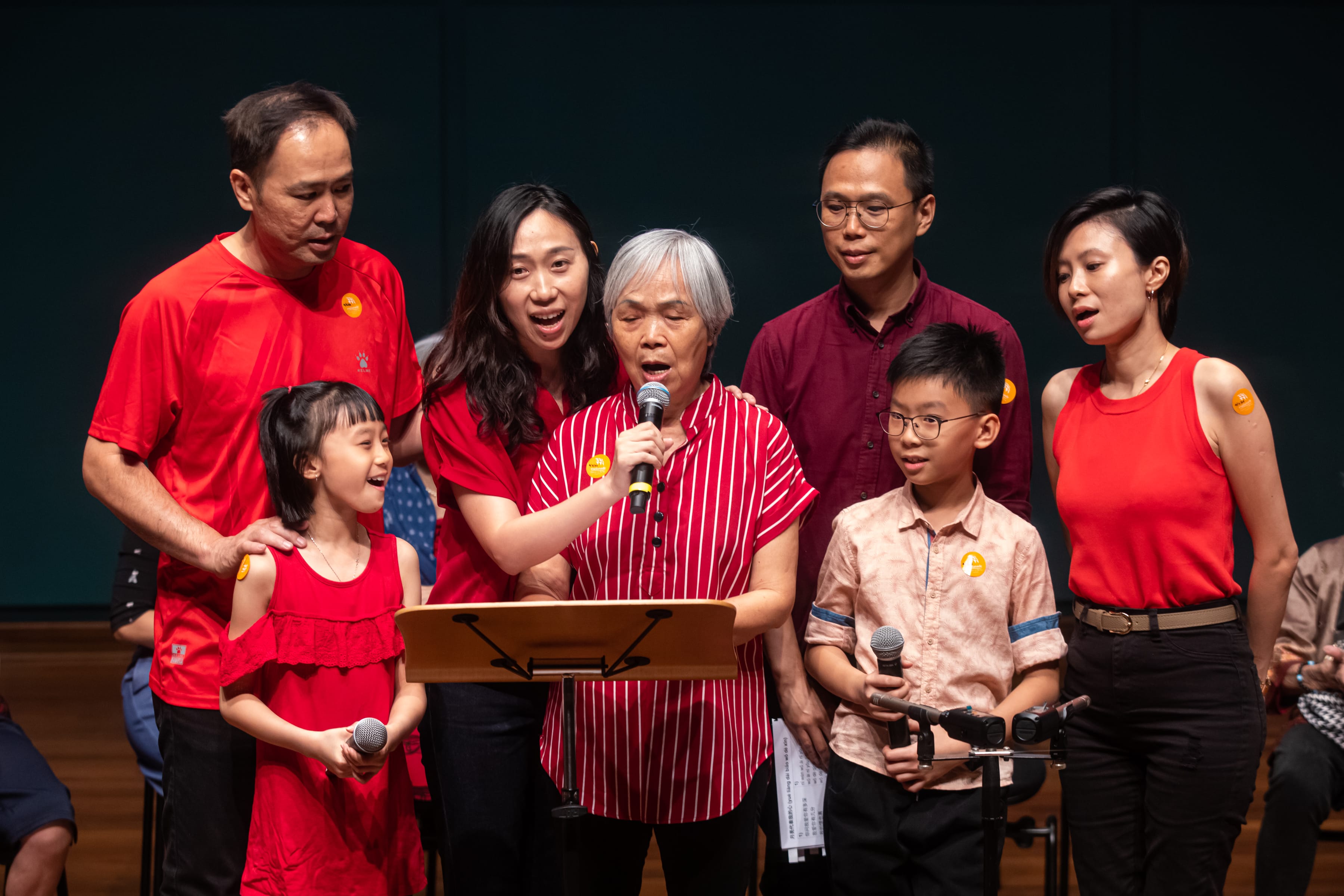
A family sharing the stage at Esplanade’s Sing Out Loud! private showcase
The science of social change
The framework is designed to transform good intentions into measurable outcomes. It begins with the Theory of Change, working with partners to map out exactly what success looks like and how to track progress towards it.
Then comes the 4A change model, which defines transformation across four dimensions:
Attitude (shifting mindsets and building confidence)
Ability (developing essential skills)
Access (removing barriers to opportunities)
Action (sustaining long-term behaviour change)
Finally, comprehensive data collection plans track these indicators, moving beyond simple headcounts to measure meaningful improvements.
This is not just theoretical. The Chinese Development Assistance Council (CDAC) discovered "fresh perspectives" through the Greater Impact Forward Together (GIFT) programme, an 18-month partnership with SMU's Lien Centre that helps organisations embed impact measurement into their core operations. As CDAC’s Senior Manager Mok How Lurn notes, "The mix of theory, practical tools, and real-life examples made learning both relevant and actionable."
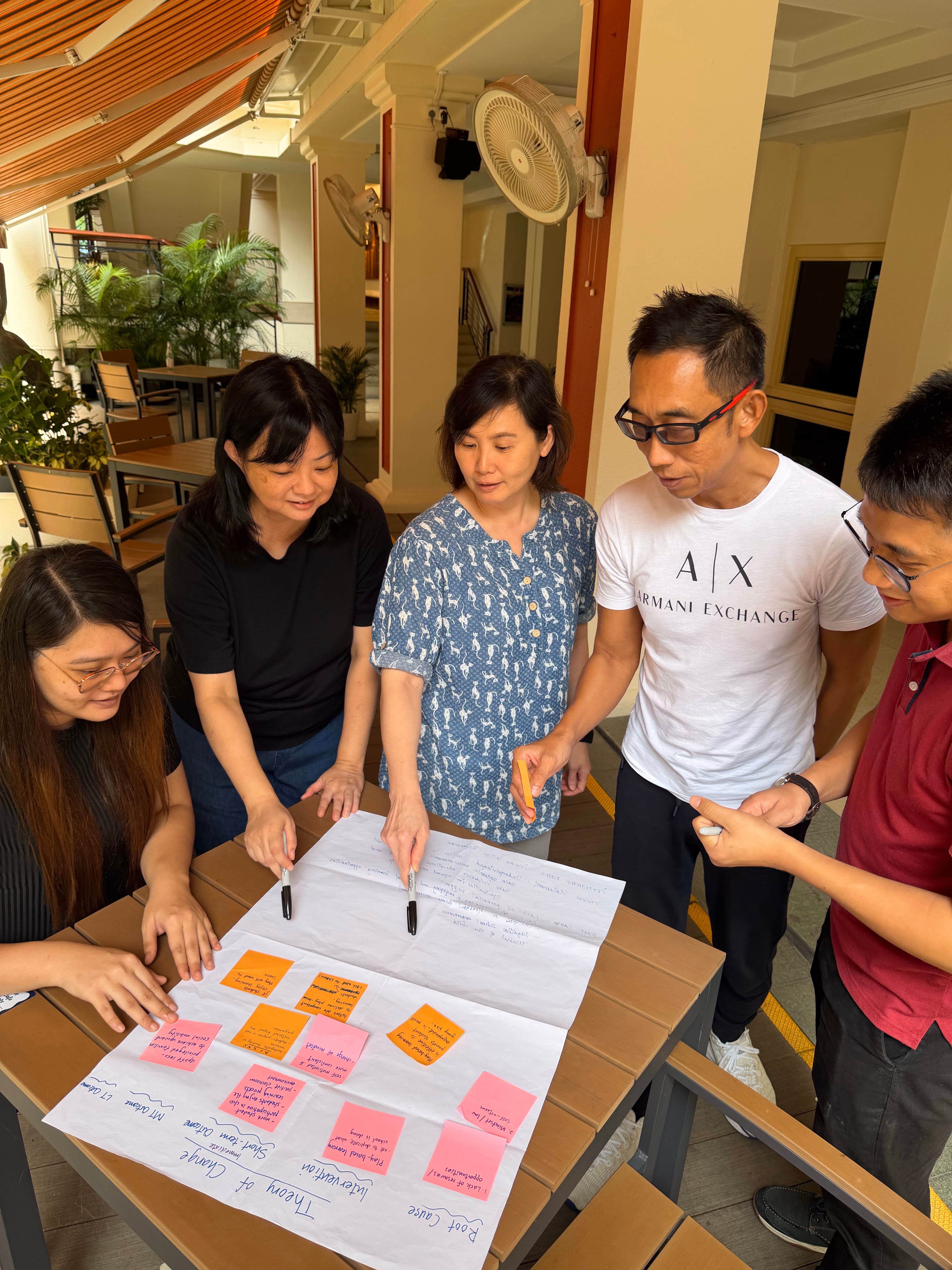
CDAC team members collaborate on developing their theory of change framework, demonstrating how impact measurement fosters strategic clarity and innovation in charitable work. CDAC’s Senior Manager Mok How Lurn pictured second from the right.
Measuring the unmeasurable
Perhaps most remarkably, this approach works even in sectors that are traditionally challenging to quantify impact. Arts and heritage charities have long considered impact measurement near impossible, but they too are finding new ways to demonstrate their value through tools like THRivE — a toolkit developed by NUS's Centre for Music and Health that helps arts and heritage focused organisations measure health and wellbeing outcomes from their programmes.
The result is an ecosystem where organisations across arts, culture, social services, education, healthcare, community development and sport are making better use of resources, creating stronger programmes and building greater trust through transparency.
The ripple effect
What emerges from this measured approach is amplified compassion. When organisations understand precisely how their work creates change, they can do more of what works and less of what doesn't. Resources stretch further. Programmes become more effective. Most importantly, more lives are genuinely transformed.
As Singapore continues to evolve as a caring society, impact measurement ensures that every dollar granted, every programme funded, and every initiative supported contributes to measurable, lasting change. In a world where kindness is precious and resources finite, perhaps the most compassionate thing we can do is measure our impact and make every act of generosity count.